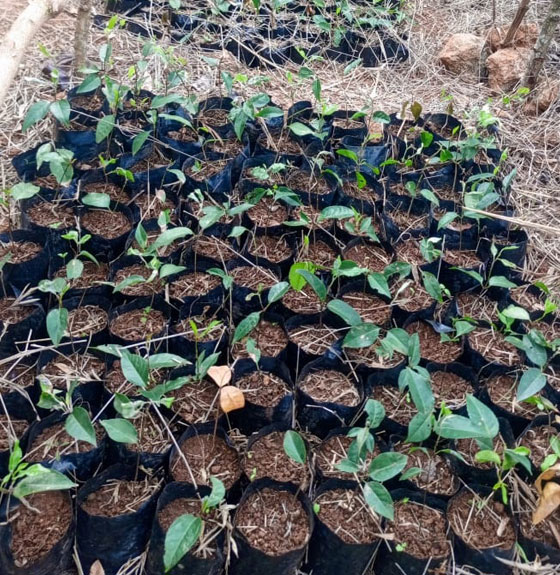
The Prunus africana (VU), also known as the Mngima tree, is found in the Taita Hills, specifically in areas like Chawia Forest, Ngangao Forest, Mbololo Forest and Sagalla Hills Forest in Voi. These hills are located in Taita Taveta County, Kenya, and are part of the Eastern Arc Mountains.
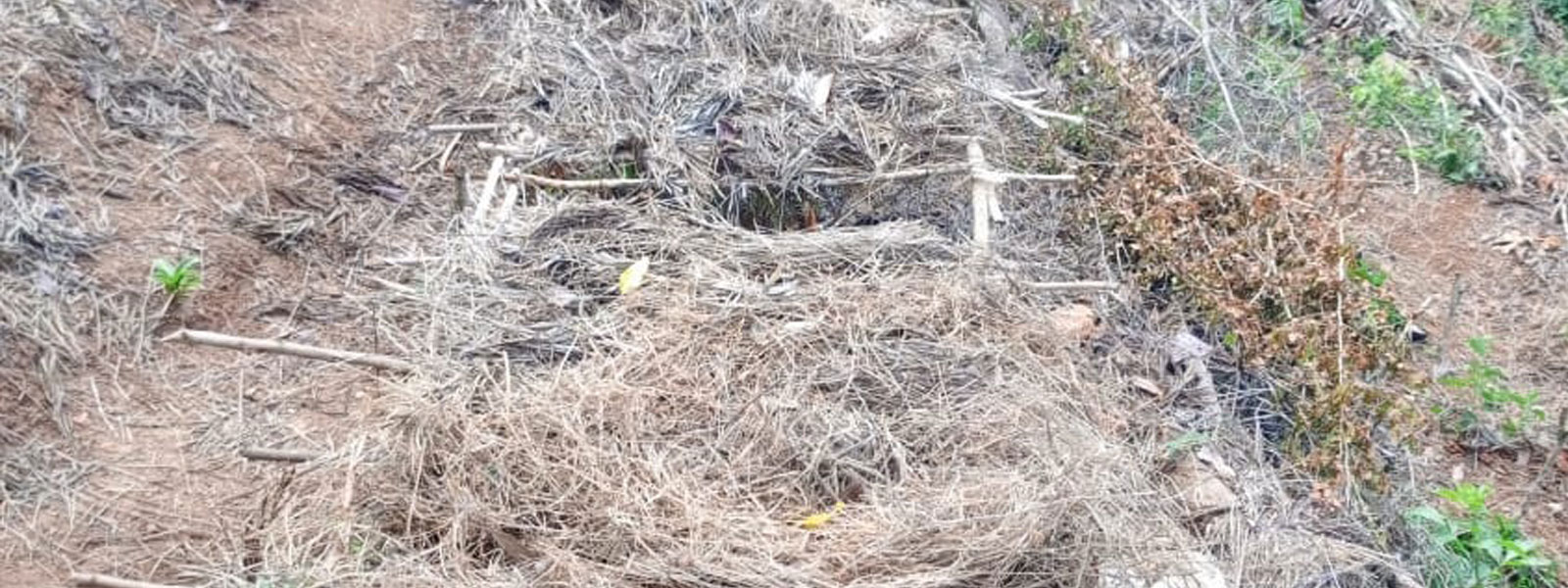
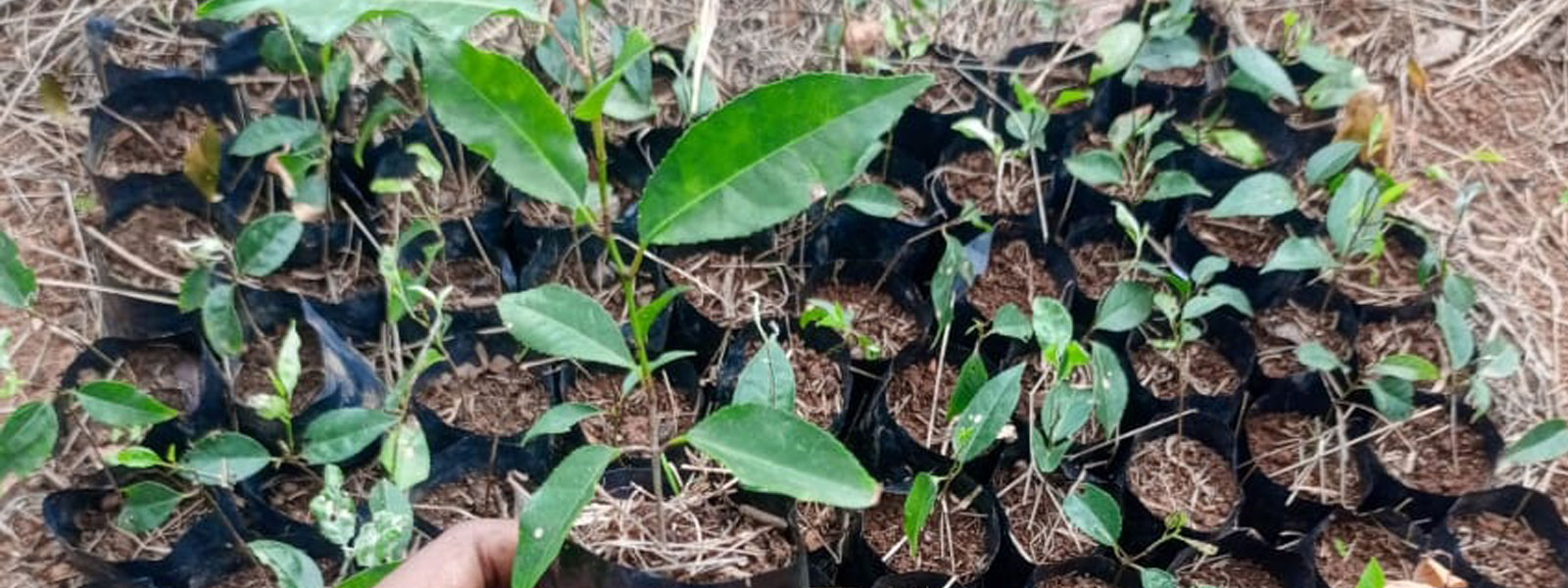
The Prunus africana
The Taita Hills are known for their biodiversity and are a focal site for regional conservation efforts. Prunus Africana (VU), also known as African cherry or Pygeum, (Mngima) is a tree species classified as Vulnerable (VU) on the IUCN Red List. This means it faces a high risk of extinction in the wild.
Wamzedu Botanical:
At Wamzedu Botanical Garden (SHG), we have a nursery bed of 3,200 (Three thousand, two hundred) tree seedlings of Prunus africana (VU) (Mngima) which is located at Wamzedu Botanical Garden (SHG) in Kwenjallo, Sagalla. This is so to prevent the plant from becoming extinct in the wild and in its natural habitat.
Uses
• Soil Improver: Its leaves can be used as mulch or green manure.
PROPAGATION
• Seed Preparation: Remove the pulp from the fruits and clean the seeds. Soaking the seeds for 24 hours can help soften the seed coat.
• Sowing: Sow the seeds in a nursery bed with a well-drained medium, such as peat or decomposed sawdust. Planting depth is typically around 2 cm.
• Germination: Seeds typically germinate within 50 to 90 days.
• Nursery Care: Seedlings need 40% shade initially and should be transplanted into polythene bags (1 liter) once they are large enough.
• Transplanting: Carefully transplant the wildings to a nursery bed or directly into planting bags, ensuring good drainage and adequate moisture.
Prunus Africana
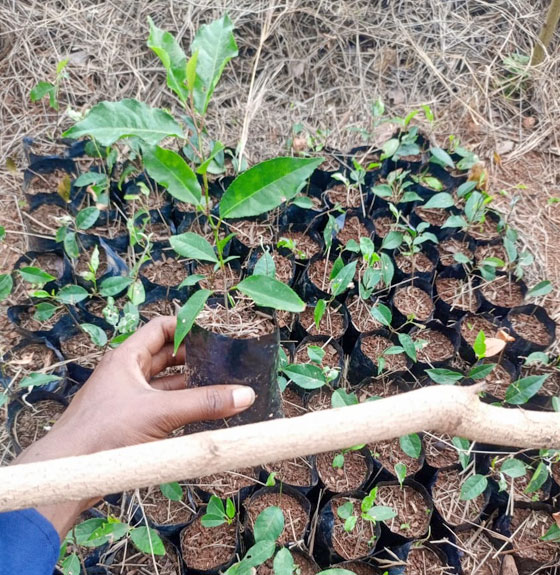
A picture of fully grown Prunus Africana
from Wamzedu Botanical Garden Nursery Bed